Skip to product information
1 of 4

AMIGO

Saboteur

Low stock
Regular price $15.00
Sale price $15.00 Regular price RRP $18.00

Saboteur is a light hidden-role card game for 3–10 players, aged 8 and up, that plays in about 30 minutes. Dwarves tunnel towards a secret gold seam while hidden saboteurs work to wreck the dig, blending bluffing, hand management and route building.

Players
3–10 players
Play time
1h
Age
All ages
Complexity
Easy

About the Game

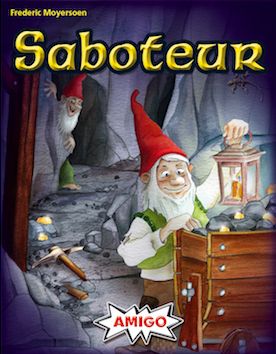
A pickaxe swings, a lamp shatters, and the hunt for gold is on. In Saboteur, players are dwarves tunnelling towards a hidden treasure, but some of the party are secretly working against the group. Miners lay path cards to carve an unbroken route to the goal, while saboteurs quietly misdirect the dig, careful not to expose themselves too obviously. After three rounds, the dwarf with the most gold wins.

Saboteur plays 3–10 players in about 30 minutes and is recommended for ages 8 and up. It is a light, quick-to-teach card game built on hidden roles, hand management and route building, with plenty of bluffing and suspicion around the table.

Designed by Fréderic Moyersoen and first published by AMIGO in 2004, Saboteur became a modern staple of the hidden-role genre and has since appeared in new editions and follow-up releases.

History

Designed by Fréderic Moyersoen and first published by AMIGO in 2004, Saboteur became a modern staple of the hidden-role genre. Its quick rounds and larger player count have made it an enduring party favourite, and it has since appeared in new editions and follow-up releases.

Shipping

$15 flat shipping · FREE over $150

Shipping details

Saboteur

$15.00

Watch: How to play

Rules of Saboteur

  • Setup: build the role deck for your player count, deal one role secretly to each dwarf, then place the start card and three face-down goal cards; only one goal hides gold.
  • Hands: deal six cards each at 3–5 players, five at 6–7, or four at 8–10; keep the draw deck and gold-nugget cards handy.
  • On your turn: play one card or discard one face down, then draw back up if the deck still has cards.
  • Path cards: extend the tunnel from the start card by matching open edges; a broken pickaxe, lamp or cart stops you playing path cards until repaired.
  • Action cards: break or repair tools, peek at a goal with a map, or use rockfall to remove a path card.
  • Round end: miners score by connecting an unbroken route to the gold goal; saboteurs score if the dig stalls and the cards run out.
  • Game end: after three rounds, total your gold nuggets; the richest dwarf wins.

Strategy

  • Early dig: favour flexible path cards that keep two or three exits open over forcing a straight line at one goal.
  • Use maps well: a quiet peek can save the team cards, but sharing everything also tells saboteurs where to interfere.
  • Protect tools: hold at least one repair option when you can; a broken tool wastes turns and makes you easy to read.
  • Watch patterns: note who breaks tools, plays awkward dead ends, or discards connectors that miners would usually keep.
  • If you are a miner: repair the player whose tool block most hurts the route, and preserve a few cards for the final approach.
  • If you are a saboteur: look helpful early, then nudge the tunnel toward rock goals or remove the key connector when it costs the group most.
  • End of round: count the remaining deck; miners may need speed, while saboteurs can win by making believable delays.